 Picky Kitchen
Choosing among China’s top 10 wire grill grate cleaning tools is not simply a matter of counting bristles or comparing prices. The right tool should remove carbon, grease, and food residue without damaging the grate surface. It should also feel stable in a wet hand. That detail matters beside a hot barbecue.
So, what is the best way to clean a wire grill grate? Steven Raichlen, barbecue expert and author, has often emphasized this practical rule: “The best time to clean your grill is immediately after cooking, while the grate is still hot.” His advice reflects real grilling conditions. Warm residue releases more easily than hardened buildup from yesterday’s meal. Still, heat alone does not make cleaning safe. Users must protect their hands, inspect the grate, and avoid loose brush fragments.
This guide compares ten cleaning tools by scraping performance, bristle security, handle design, material quality, and ease of rinsing. Some tools use stainless-steel wire. Others use coil springs, scraper edges, or abrasive pads. Each design has weaknesses. A strong scraper may leave marks on delicate enamel. A soft pad may struggle with thick carbon. That is worth admitting.
The comparison also considers practical experience, not just product claims. A tool that works on a restaurant-style steel grate may feel awkward on a compact home grill. Residue can hide between narrow wires. Grease can collect inside the handle joint. These small problems often decide long-term satisfaction. Before buying, check the grate material, cleaning temperature, tool construction, and replacement options. The best choice is the one that cleans effectively while reducing avoidable damage and safety concerns.
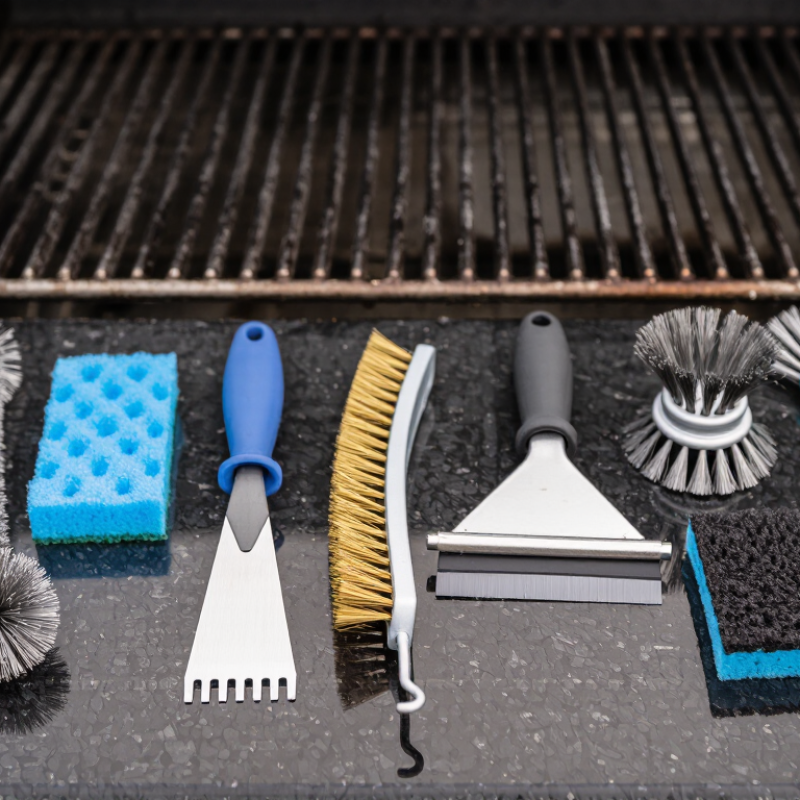
Chinese manufacturers produce several practical wire grill grate cleaning tools. Stainless steel wire brushes are common for cast iron and heavy steel grates. Their firm bristles remove carbon buildup and dried food quickly. Brass wire brushes are softer and suit porcelain-coated surfaces better. They reduce scratching, although they may need more repeated passes. Coiled wire cleaners reach between narrow grate bars. Some models combine a brush head, scraper, and hanging loop. This design helps during outdoor cooking, where storage space is limited.
In my experience, brush shape matters as much as wire strength. A three-sided head cleans corners more effectively than a flat head. A curved handle can protect knuckles from hot surfaces. However, very stiff wires may loosen after repeated use. That is a weakness worth checking. Reliable tools should have secure bristle joints and corrosion-resistant handles. Buyers should also inspect packaging instructions and test the tool on a cool, small area.
Tips: Clean the grate after it cools, but before grease fully hardens. Use short strokes instead of excessive force. Check for loose bristles before every use. Replace the tool when wires bend, detach, or appear damaged. A scraper helps with thick residue, but it should not gouge the cooking surface. For porcelain-coated grates, choose softer brass wires and lighter pressure. Mistakes happen. I once used too much force and left visible marks near the grate edge.
Match the tool to the grate material. Stainless steel accepts firm wire bristles. Coated surfaces need gentler nylon tools. Cast iron needs controlled scraping. Small details matter.
A coil-style brush follows rounded bars closely. A narrow scraper reaches burned edges. Flat brushes clean wide surfaces faster.
Pull the brush across a dry cloth before use. Look for loose or bent wires. Replace the brush immediately if bristles detach. One loose bristle matters.
No. Use short strokes along the grate bars. Heavy pressure may scratch coated surfaces. Scrapers remove thick carbon, but corners may remain greasy.
Let the grate cool completely. Use a nylon pad and mild dish soap. Test the method on a small area. I once used too much pressure and left visible marks.
Scrape cast iron carefully without removing its seasoning. Avoid long soaking periods. Dry it immediately with a clean cloth. Moisture can cause rust.
Choose a long, heat-resistant handle. It keeps hands away from hot grease. A hanging loop helps the tool dry between uses.
Clean it when warm, but never dangerously hot. For safe handling, let it cool completely before removing it. Wear heat-resistant gloves. The timing can feel unclear.
Let the grate cool first. Apply a small amount of baking soda paste. Scrub gently, then rinse thoroughly. Avoid force. It may need another pass.
Check the cooking surface for wires, residue, and moisture. Dry the grate immediately. Heat the empty grill briefly afterward. A second inspection matters.
China’s wire grill grate cleaning tools offer a wide range of practical designs, including wire brushes, scraper tools, coil cleaners, and combination kits. This guide compares ten popular tool types made in China by considering cleaning efficiency, bristle strength, handle comfort, heat resistance, durability, and suitability for different grate materials. It also explains how to choose the right tool based on the grate’s shape, cooking frequency, and the level of grease or residue buildup.
For safe cleaning, allow the grill to cool to a manageable temperature, remove loose debris, and scrub the grate carefully from multiple angles. A scraper can help loosen stubborn residue, while a suitable brush removes remaining particles. After cleaning, inspect the tool for wear, wash and dry it thoroughly, and store it in a clean, dry place. If you are wondering “what is the best way to clean a wire grill grate,” the answer depends on using the right tool consistently and following safe maintenance practices.
